
Cost of Living Impacting Employment Decisions

Norwest Recruitment recently conducted a survey with their employees database asking about the impact of the cost of living on their lives and the decisions they are making regarding their employment. We received a huge response from 646 people. Interestingly, the results revealed a significant 48% are looking for a new job to increase their salary, this is followed by 19% looking for a second job, 11% seeking increased hours by overtime and 7% said someone in their household, either their partner or themselves were looking to re-enter the workforce. The ‘Other’ comments formed 14% where the most popular comment was budgeting, followed by asking for a pay increase and moving house/location.
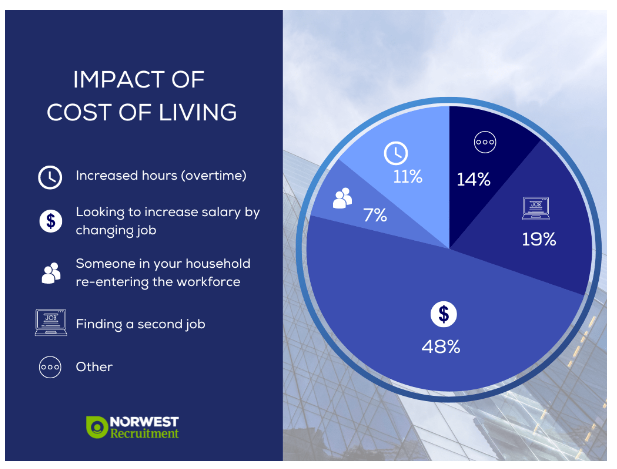
The results of this survey provide important insights into how these factors can affect businesses. As almost half of the responses indicate looking for a new job, we will focus on how this could impact businesses.
Talent Retention and Recruitment
The high percentage of candidates looking to increase their salary by changing jobs highlights the importance of competitive compensation in attracting and retaining top talent. Employers need to be aware that employees are actively seeking better-paying opportunities elsewhere. To mitigate the risk of losing valuable employees, companies should regularly review their renumeration packages and benchmark them against industry standards. Offering competitive salaries, along with other attractive benefits and perks, can help retain skilled employees and make the organisation more appealing to potential candidates.
Cost of Employee Turnover
When employees leave a company to pursue higher-paying opportunities, businesses face the cost of employee turnover. This includes recruitment expenses, onboarding and training costs for new hires, and the potential productivity loss during the transition period. By addressing salary concerns proactively and ensuring that employees feel recognised, businesses can reduce turnover rates and minimise the associated costs.
Impact on Workforce Productivity
Employees who are dissatisfied with their current salary may experience reduced motivation and engagement in their work. This can ultimately impact their productivity and performance. By proactively addressing salary concerns and offering opportunities for salary growth and advancement within the organisation, businesses can foster a more motivated and engaged workforce. Regular performance evaluations and opportunities for skill development and promotion can help employees see a clear path for career advancement and salary increases, reducing the likelihood of seeking job changes solely for financial reasons.
Employer Branding and Reputation
A company’s reputation as an employer can be influenced by its approach to compensation. Businesses that are known for offering competitive salaries and valuing employee financial well-being are more likely to attract top talent and build a positive employer brand. However, if employees perceive that their salary concerns are not being addressed, it can have a negative impact on the company’s reputation and ability to attract and retain skilled professionals. It is crucial for businesses to prioritize fair and competitive compensation practices to maintain a positive employer brand image.
Market Competitiveness
The survey results serve as a reminder that the labour market is dynamic, and employees are actively seeking better-paying opportunities. To remain competitive, businesses must continually assess market trends and ensure that their compensation packages align with industry standards. Regular salary benchmarking and analysis can help businesses identify potential gaps and make necessary adjustments to attract and retain top talent.
By addressing salary concerns and offering competitive compensation, businesses can enhance talent retention, reduce turnover costs, improve productivity, and maintain a positive employer brand image in a competitive job market. If you are starting to see any of these trends in your business, contact us for a confidential chat on 02 8853 4111. We can assist you with talent acquisition, salary benchmarking and market insights.